All the perspectives on the structure and future of graphene
Published on 3 Nov 2023
Chemistry
Click to watch the summary of this article
Graphene is an extraordinary material made up of a single sheet of carbon atoms organized in a two-dimensional honeycomb lattice. It was isolated and described in 2004, earning its discoverers the Nobel Prize in Physics. Graphene has outstanding features such as great electrical conductivity, high thermal conductivity, and remarkable mechanical strength. It has a wide range of possible uses, from electronics and energy storage to materials research and even medical devices. Because of its two-dimensional structure and unique features, graphene is a prospective contender for the creation of innovative technologies that have the potential to revolutionize a variety of industries in the future.
Graphene is an allotrope of carbon, which is a monolayer of carbon atoms bonded in hexagonal honeycomb lattice nanostructure. Each atom has a valence of 3, which means that each carbon atom in the structure is connected to its 3 nearest neighbors. When layers of graphene are stacked on each other, they form a material called graphite.
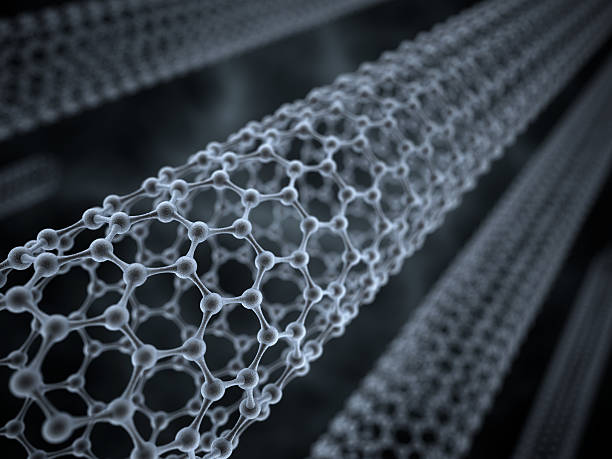
Graphene is the thinnest chemical compound known to mankind at one atom thick, as well as the lightest (a square meter weighs around 0.77 milligrams). Nevertheless, it is the strongest compound known to mankind with a tensile strength of 130 GPa (100-300 times stronger than steel), and Young’s Modulus of 1 TPa. Additionally, graphene is the best conductor of heat at room temperature and the best conductor of electricity known to mankind. Another unique property of graphene is its high flexibility. Graphene is highly transparent to visible light, with a transparency of 97.7%. Last, but not the least, graphene is extremely flexible.
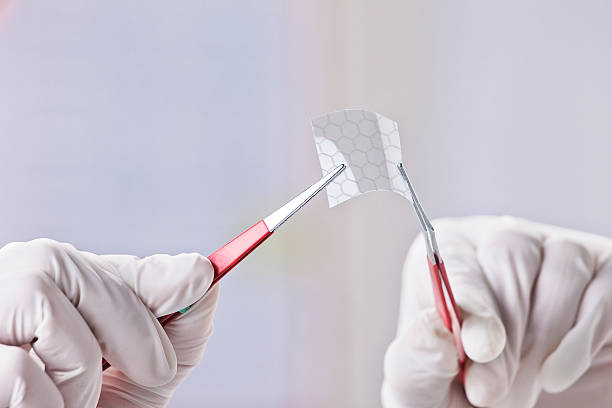
Since graphene has a lot of unique properties such as flexibility, high conductivity, mechanical strength, transparency, and others, graphene is known as “the material of future” and can have multiple applications in various, and could possibly even lead to new scientific and technological revolution.
First produced in this century, graphene has already found a wide range of applications. As graphene has very high electrical conductivity, higher than that of many metals, it is increasingly used in touchscreens and TVs.
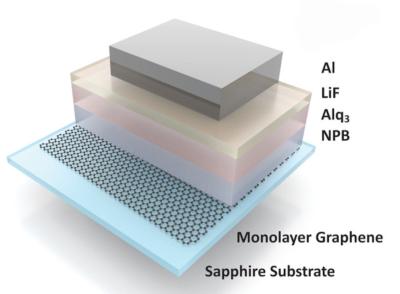
Particularly advantageous is the usage of graphene in manufacturing of OLED screens, that are more-and-more being used in modern TVs, thus, allowing to reduce damage to vision as commonplace LED screens are emitting light that was found to be relatively harmful.
Indeed, utilizing materials never comes without certain challenges, even that innovative like graphene. Researchers genuinely believe that large-scale production of products that include graphene will not be problem-free as the layer-by-layer extraction method that was used by scientists from the University of Manchester is assumed to be extremely expensive as even mild defect in the structure of graphene might distort its essential properties such as decreased electrical conductivity.
Another field where graphene found its application is water treatment. Although this field started developing recently, experts have already managed to incorporate graphene alongside polysulfone into water filters. Due to the incredibly small size of carbon atoms in graphene, there are very small empty spaces between atoms that are enabling filters to prevent the passing of antibiotics, pathogens, and toxins into water. It is foreshadowed that as soon as usage of these filters will be more widespread, there will be a reduction in
plastic waste.

Since the discovery of graphene in 2004, numerous groundbreaking discoveries have been made. One of the standouts is Geim and Novoselov's discovery of different properties of graphene, earning them the Nobel Prize in Physics in 2010. In 2004, they used an adhesive tape and graphite approach for the first time to extract and characterize graphene. They received the Nobel Prize for their groundbreaking discovery, which transformed materials research. Another fascinating discovery about graphene is its unmatched mechanical strength. The strength of graphene, only one atom thick, is believed to be roughly 200 times greater per unit mass than that of steel. Currently, researchers are attempting to make integrated circuits, transistors, and other electronic components with the help of graphene. The optical qualities of graphene are also being used for photonics applications like modulators and lasers.

In conclusion, graphene stands as a truly remarkable material with an exceptional array of properties and limitless potential. Its discovery in 2004, which earned its founders the Nobel Prize in Physics, has paved the way for innovative technologies that could revolutionize multiple industries. Graphene's unique attributes, from its exceptional strength to its remarkable conductivity and transparency, make it a material of the future. Already, it has found applications in electronics, water treatment, and more, demonstrating its versatility and significance. As researchers continue to unlock its potential, graphene's impact on science and technology is set to grow, promising a future filled with exciting possibilities.